Lack of Sleep… A Silent Danger You Might Overlook
In today’s fast-paced world, pushing ourselves hard with work, binge-watching TV shows late into night, or endlessly scrolling through phones has become normal for many people. This often leads to reduced sleeping hours without realizing it. Many people think that a “lack of sleep” is a minor issue that can be caught up on over the weekend, but in reality, insufficient rest is slowly chipping away at both your physical and mental health.
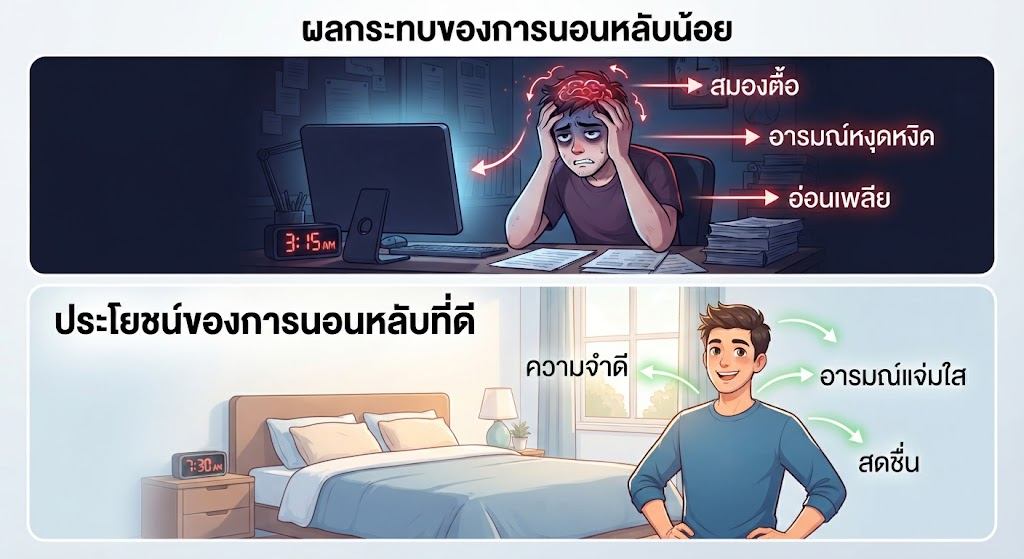
Illustration: Exhausted Mind and Body
(Image description: A minimal-style illustration or photo showing a person holding their head in exhaustion and fatigue, sitting in front of a computer in a dimly lit bedroom at night, with a clock showing 3:00 AM.)
Main Impacts When Your Body “Sleeps Too Little”
1. Brain Fog, Poor Memory, and Lack of Concentration
When we sleep, the brain organizes memories and clears out accumulated waste. If you sleep too little, these processes are disrupted, leaving you feeling fuzzy-headed, unable to think clearly, suffering from a shorter attention span, and more prone to making poor decisions during the day.
2. Mood Swings, Irritability, and Heightened Stress
Lack of sleep directly affects neurotransmitters in the brain, reducing your ability to regulate emotions. You might find yourself easily irritated by minor issues, anxious for no apparent reason, or at a higher risk of long-term depression.
3. Weakened Immune System, Falling Ill Easily
While we sleep deeply, the body produces proteins called cytokines, which help fight infection and inflammation. Sleeping less lowers your immunity, making you more susceptible to colds and infections, and slower to recover.
4. Increased Appetite and Weight Gain
Sleep is directly related to hormones controlling fullness (leptin) and hunger (ghrelin). When you are sleep-deprived, your hunger hormones spike, leading to cravings for snacks, sweets, or greasy late-night foods, which ultimately leads to obesity.
5. Increased Risk of Serious Chronic Diseases
Chronic sleep deprivation doesn’t just make you tired; it increases the risk of high blood pressure, cardiovascular disease, and diabetes because blood sugar levels and stress hormones become imbalanced.
Illustration: Health Care and Good Sleep
(Image description: A clean, airy bedroom decorated in warm, soothing tones, with the lights turned completely off, featuring cozy pillows and a bed that looks inviting, evoking relaxation and readiness for rest.)
Restore Life’s Balance with “Quality Sleep”
Catching up on sleep only during the weekends cannot reverse the negative effects of accumulated sleep deprivation throughout the week. The best approach is to adjust your habits:
- Go to bed and wake up at the same time every day to build a balanced biological clock.
- Avoid screens and phones for at least 30 minutes before bedtime to reduce blue light that interferes with melatonin production.
- Keep your bedroom dark, cool, and quiet to promote deep sleep.
Sleep is not a “waste of time,” but rather the best investment you can make to allow your body to repair itself and wake up refreshed and ready to take on the new day.